Critical Thinking? Huh?
Updated: Jul 20
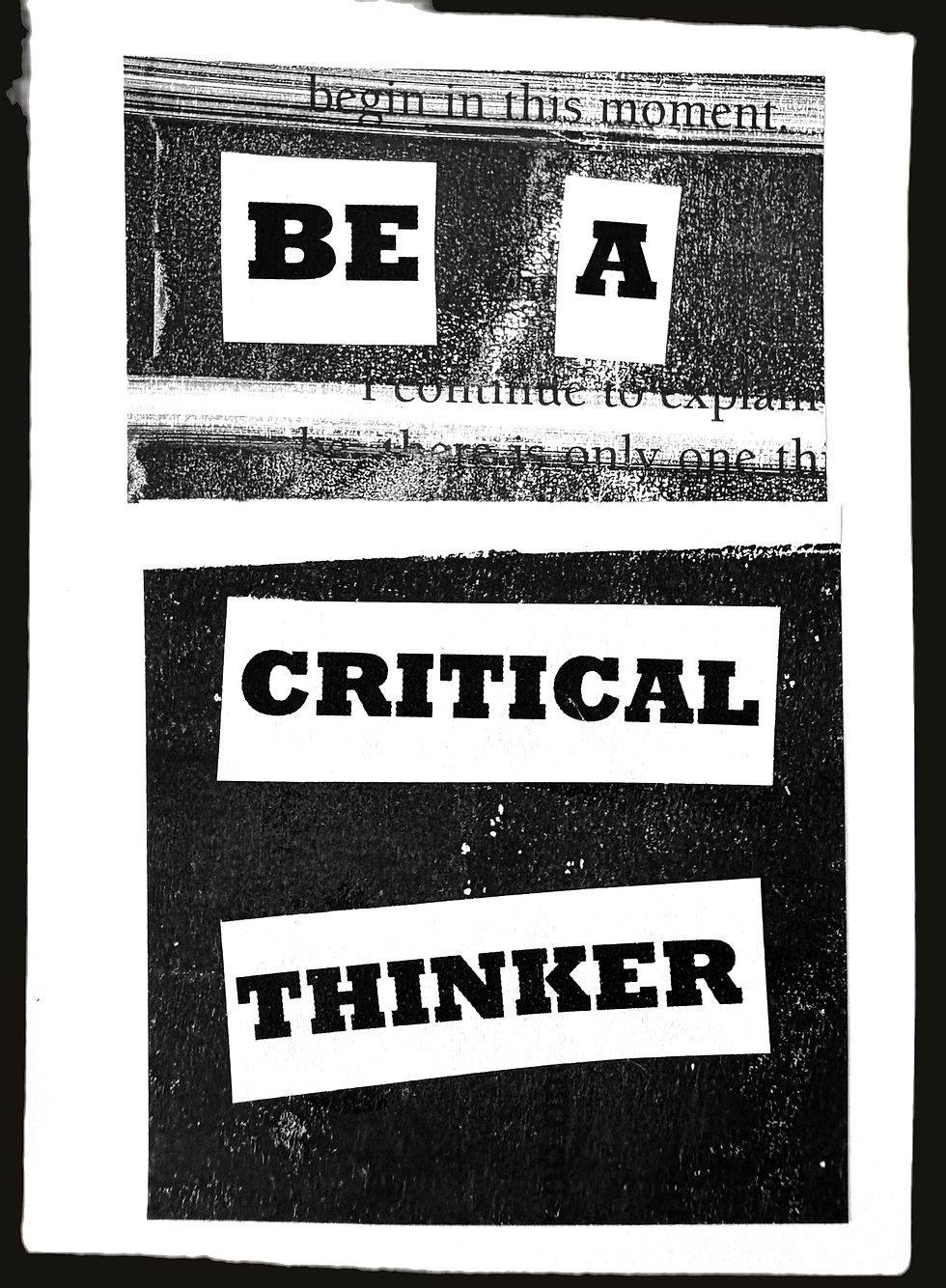
Critical thinking is a complex concept. It applies within and across disciplines, and can be defined in multiple ways from multiple perspectives. Let's cultivate complexity by considering multiple definitions. Here are (5) definitions to consider with links to credible and trustworthy sources you can find on our "STUFF" page. Because this is our website, not my website.
Critical Thinking
Definition #1. "...critical thinking requires discernment. It is a way of approaching ideas that aims to understand core, underlying truths, not simply that superficial truth that may be most obviously visible." (Teaching Critical Thinking: Practical Wisdom, p. 9)
Critical Literacy
Definition #2. "[Critical literacy] signals a move to question the naturalized assumptions of the discipline, its truths, its discourses and its attendant practices." (Literacy and Power, p. 13)
Definition #3. "...critical literacy means making one's self present as part of a moral and political project that links the production of meaning to the possibility for human agency, democratic community, and transformative social action." (Literacy: Reading the Word and the World, p. 15)
The Art of Rhetoric
Definition #4. Rhetoric is "the systematic study and intentional practice of effective symbolic expression. Effective here [] mean[s] achieving the purpose of the symbol-user, whether that purpose is persuasion, clarity, beauty, or mutual understanding." (The History and Theory of Rhetoric: An Introduction, Eighth Edition, p. 10)
Definition #5. Rhetoric is "the art, theory, and practice of ethical communication. (Everyone's an Author, p. 6)
It is important to recognize that rhetoric can be used for both ethical and unethical purposes. This speaks to the importance of critical reading, writing, and thinking–whether reading a news article, billboard, political yard sign, or the marketing elements on a website and items intended to be sold in exchange for your hard earned dollars. Likewise, studying the intentional rhetorical choices made by others empowers you to make intentional (and ethical) rhetorical choices when designing or composing any kind of planned communication–whether a poster, zine, speech, blog, or social media post.
Critical thinking takes time. Let's make time. Critical thinking is not just for English classes. Regardless of the information you are teaching or learning, disseminating or consuming, composing or sharing, critical thinking is relevant and can be applied–should be applied–whether teaching biology, making a purchase, watching a documentary, or interacting on social media with influencers–remember, they are called influencers for a reason.


